
Background
Senseed:
sensory integration become part of everyday play
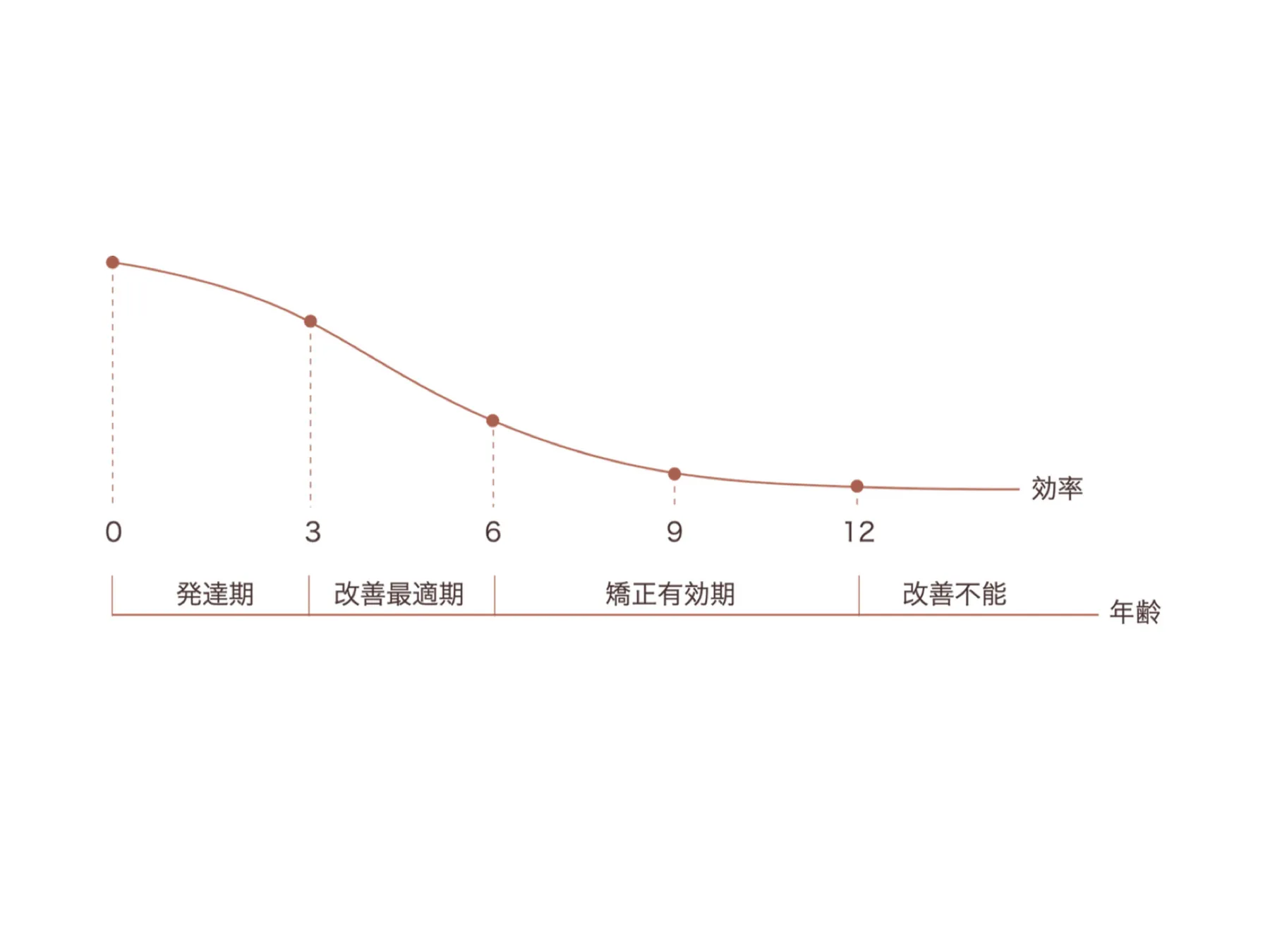
Sensory integration is the process through which the brain organizes information from touch, vision, hearing, movement, and body awareness, enabling us to respond to the world through our bodies. It develops through accumulated sensory and physical experiences during childhood, particularly in the years before around age twelve. As lifestyles, family structures, cities, and ways of playing continue to change, so do the opportunities children have to move their bodies and encounter diverse sensory experiences in everyday life. SENSEED began by asking how these experiences could be brought back into the home—not as specialized training, but as a natural part of play between children and their families.
Research & Analysis
About Sensory Integration
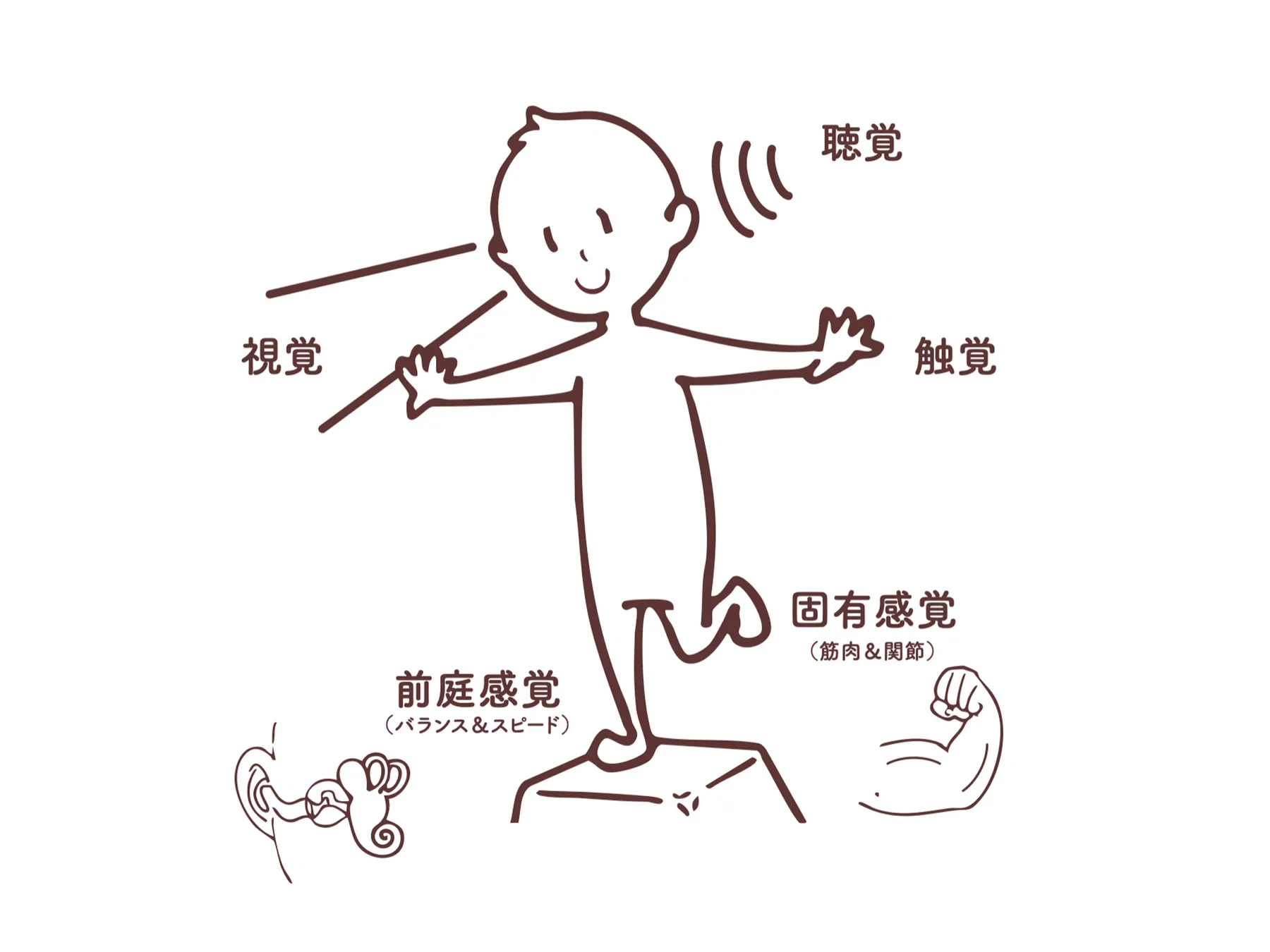
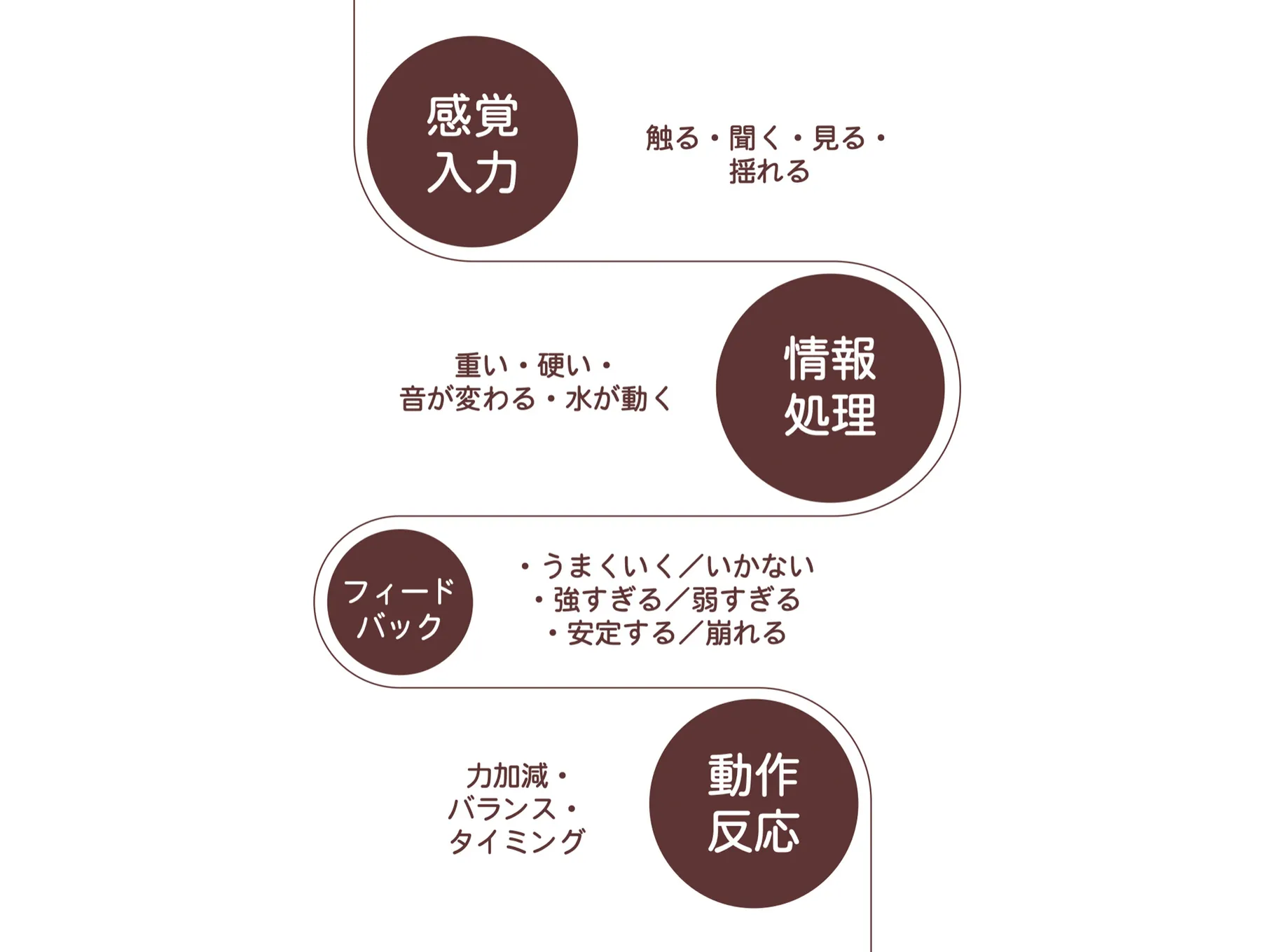
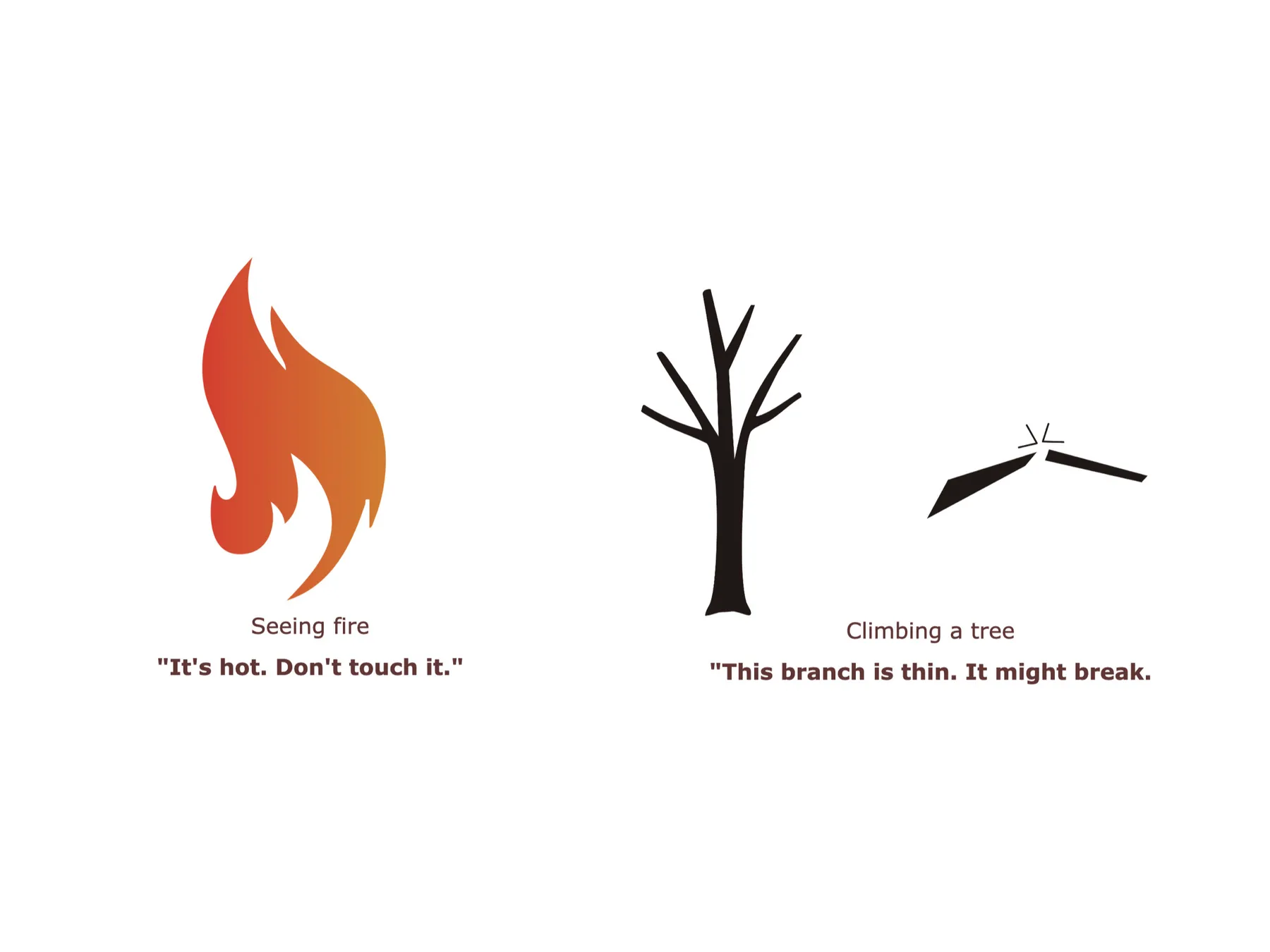
Sensory integration is the process by which the brain organizes and combines information from vision, hearing, touch, the vestibular sense, and proprioception, translating it into appropriate bodily responses to the surrounding environment. Beyond seeing, hearing, and touching, we constantly sense the tilt and movement of our bodies, as well as how much force we are using, to understand the relationship between ourselves and the world around us. By integrating these sensations, we learn to adjust posture and movement, perceive distance, height, and speed, and recognize potential danger. Sensory integration develops through repeated cycles of movement, sensory feedback, and adjustment. The years up to around age twelve are considered particularly important, as diverse physical and sensory experiences during this period form a foundation for how children learn to use their bodies and adapt to their surroundings.
Challenges in Sensory Development
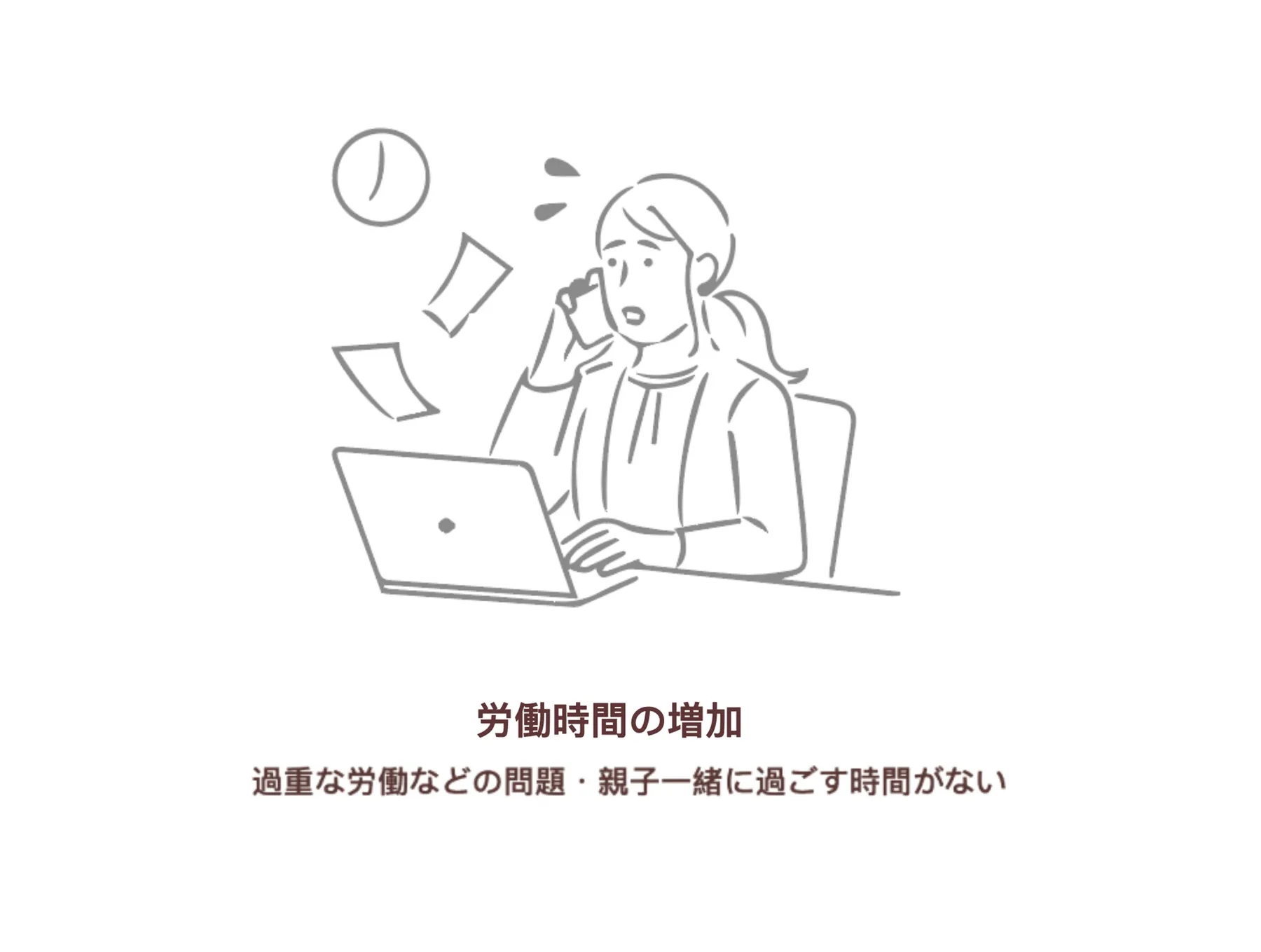
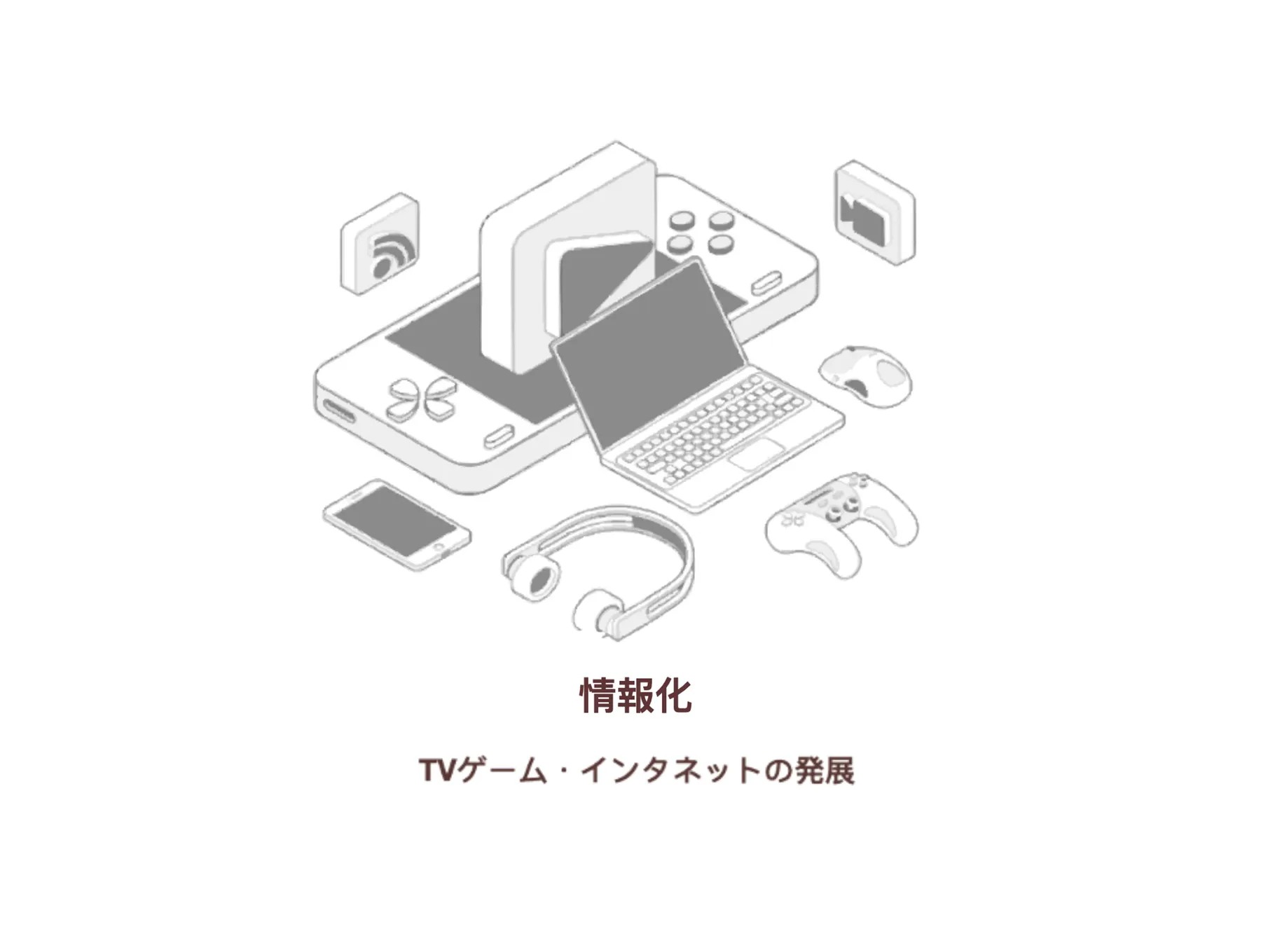
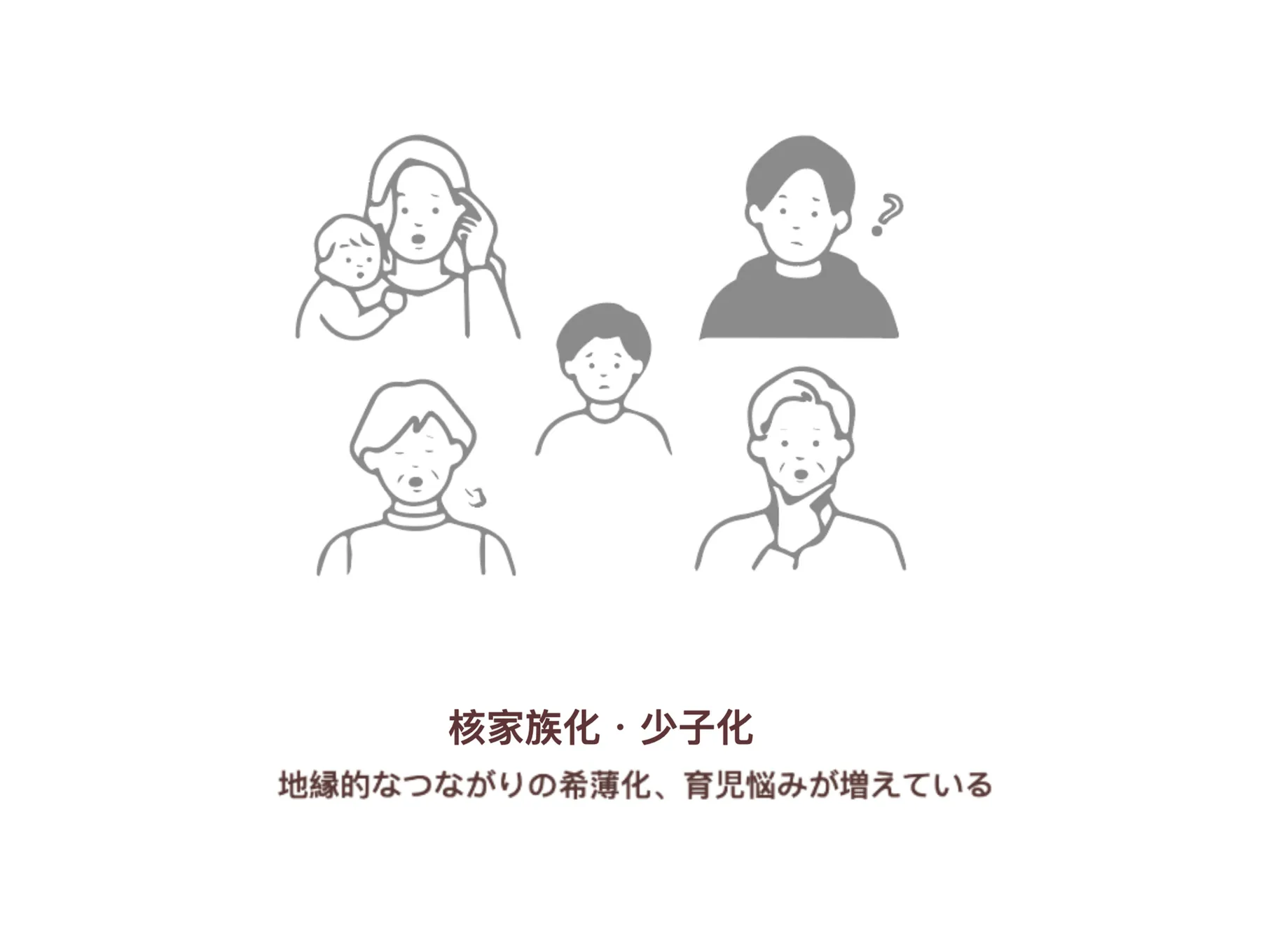
In recent years, increasing attention has been drawn to physical “clumsiness” among children. Difficulties such as frequent falling, maintaining posture, controlling force, or moving the body as intended, as well as challenges in adapting to group activities, may be related to sensory integration. At the same time, the environments surrounding children have changed significantly. Urbanization has reduced opportunities for active play and contact with nature, digitalization has transformed how children play, families may have less time to spend together, and declining birth rates and nuclear family structures have changed everyday social interactions. Together, these shifts are changing the opportunities children have to move their bodies and encounter diverse sensory experiences. Rather than focusing only on what children can or cannot do, sensory development also needs to be considered in relation to the environments in which bodily and sensory experiences are formed.

Learning from Daily Play
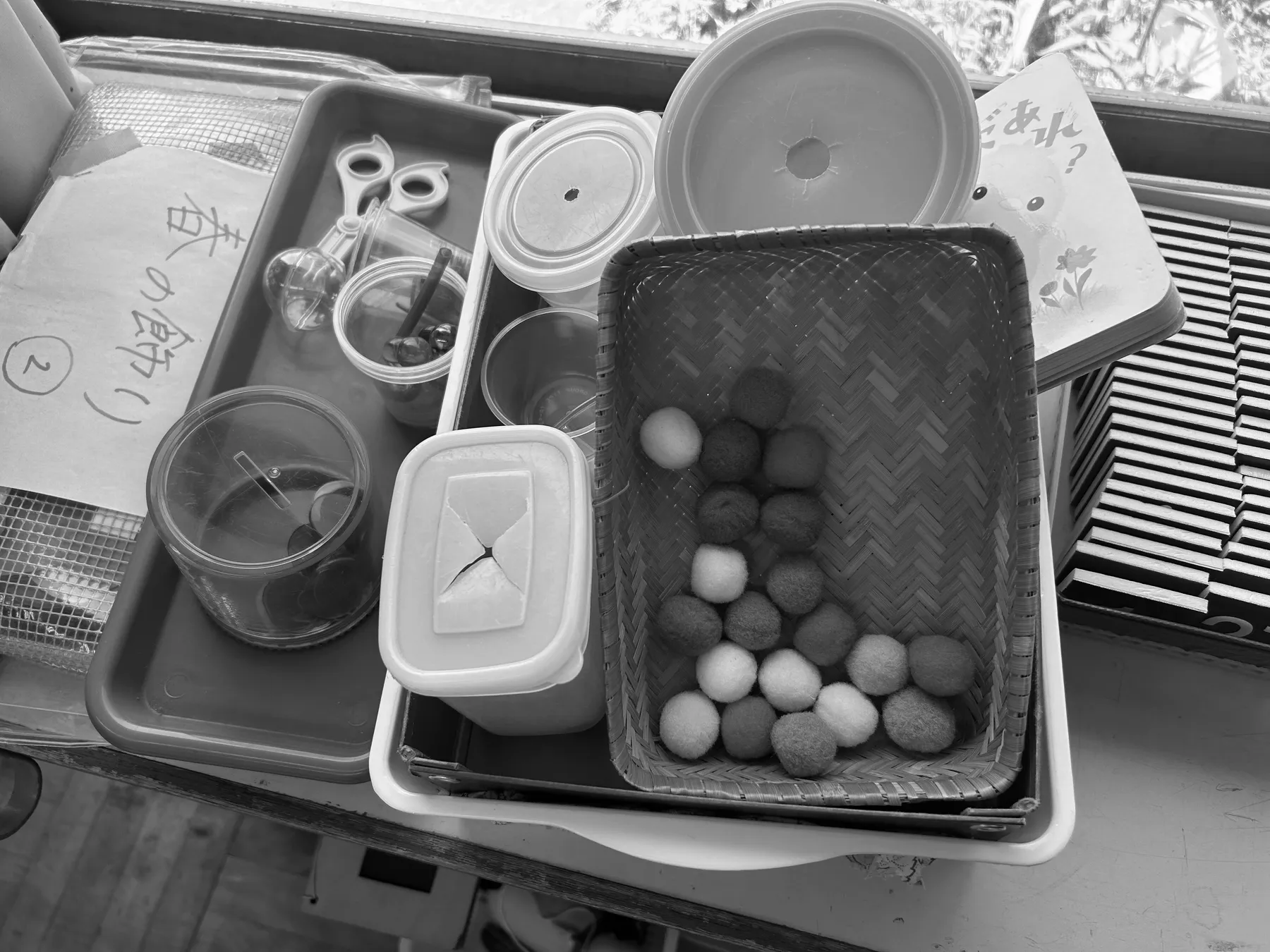
Everyday play already contains a rich variety of bodily movements and sensory experiences. Children run, turn, push, pull, grasp, and strike, while also touching sand and water, rolling objects, listening to sounds, and observing how things change. Through these interactions with their surroundings, they discover their own ways of playing. What became clear through observation was that children do not move their bodies simply to receive sensory stimulation. They move because they want to touch, move, explore, and see what happens. They perceive the changes produced by their actions, try again, and gradually vary their force and movement as the play develops. This self-initiated movement, driven by the desire to play, became an important clue for exploring sensory development through everyday play.
Body, Objects, and Movement
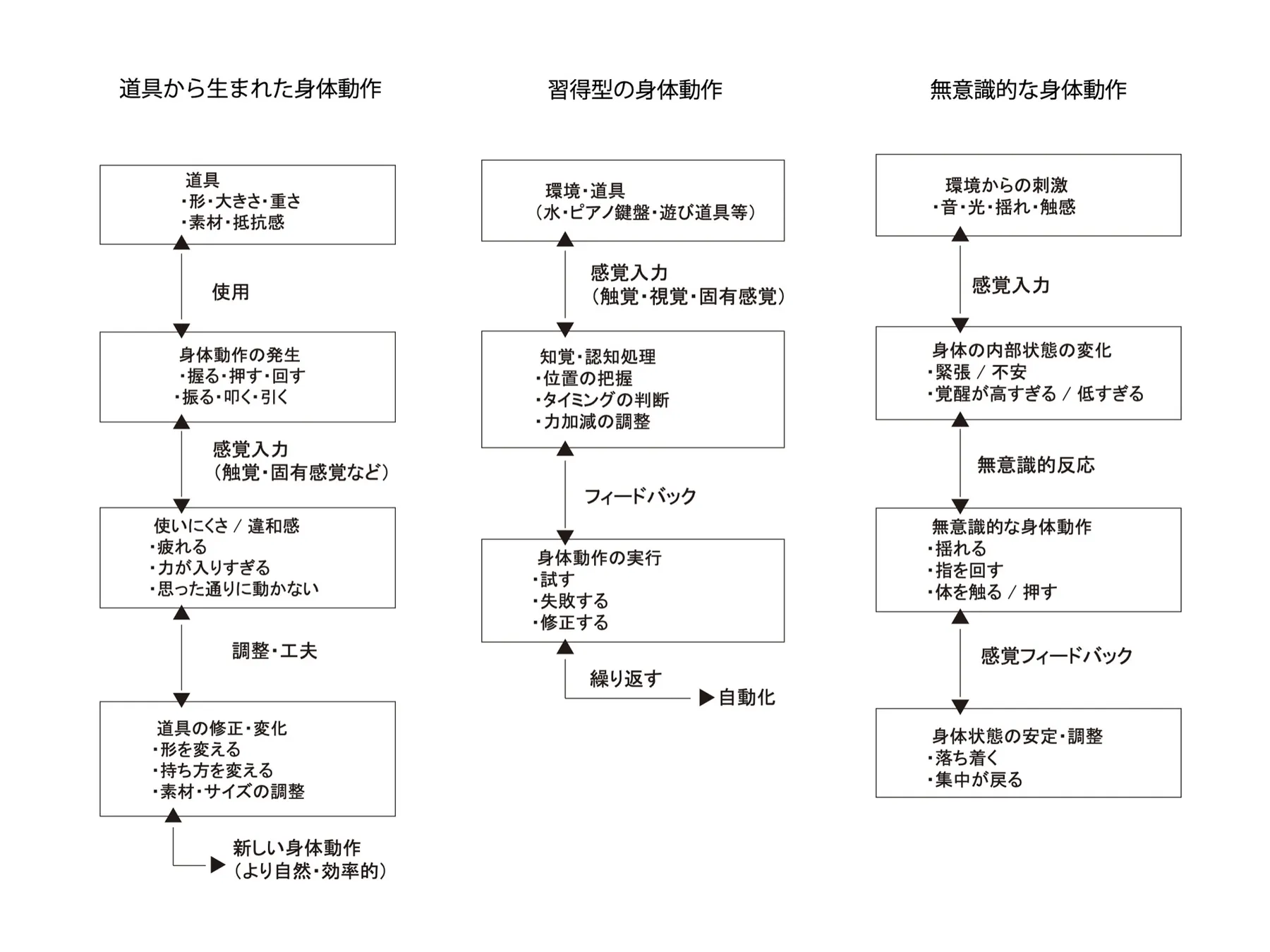
Observing bodily movement in play revealed that movement is shaped not only by a child’s intention, but also by the form, size, weight, material, and behavior of an object, as well as by the phenomena it produces. Actions such as grasping, pushing, pulling, turning, and striking are naturally adjusted as children perceive weight, resistance, vibration, sound, and visual changes in response to their movements. An object, therefore, is not simply something used to perform an action; it can invite movement and return the result of that movement to the body as sensory feedback.I examined how bodily movements emerge through three perspectives: movements shaped by tools, learned movements, and unconscious movements. When using an object, we perceive its form, size, weight, material, and resistance through the body, adjusting our grip or force when something feels difficult or uncomfortable, and sometimes even modifying the object itself. When learning a new movement, sensory information guides repeated cycles of trial, failure, and correction until the movement gradually becomes automatic. The body can also respond unconsciously to environmental stimuli such as sound, light, vibration, and touch. These observations suggest that bodily movement does not exist within the body alone; it is continuously shaped and adjusted through sensory feedback from objects and the surrounding environment. Designing this relationship became a key approach for encouraging spontaneous and diverse bodily movements.
From Research to Design
I shifted my focus from providing specific sensory stimuli or prescribing particular movements to creating situations that make children naturally want to move and explore. The form, material, weight, and resistance of an object, together with changing phenomena such as water, bubbles, sound, and drawn traces, can become invitations to play. Children move to discover what will happen, receive sensory feedback from their actions, and repeatedly adjust their force, speed, and way of moving. Rather than defining a single correct way to play, I also aimed to leave room for children to discover and develop their own ways of interacting. SENSEED grew from this approach: rather than “teaching” sensation, it designs conditions in which the relationship between body and senses can develop naturally through the desire to play.


